
Last updated November 15, 2026
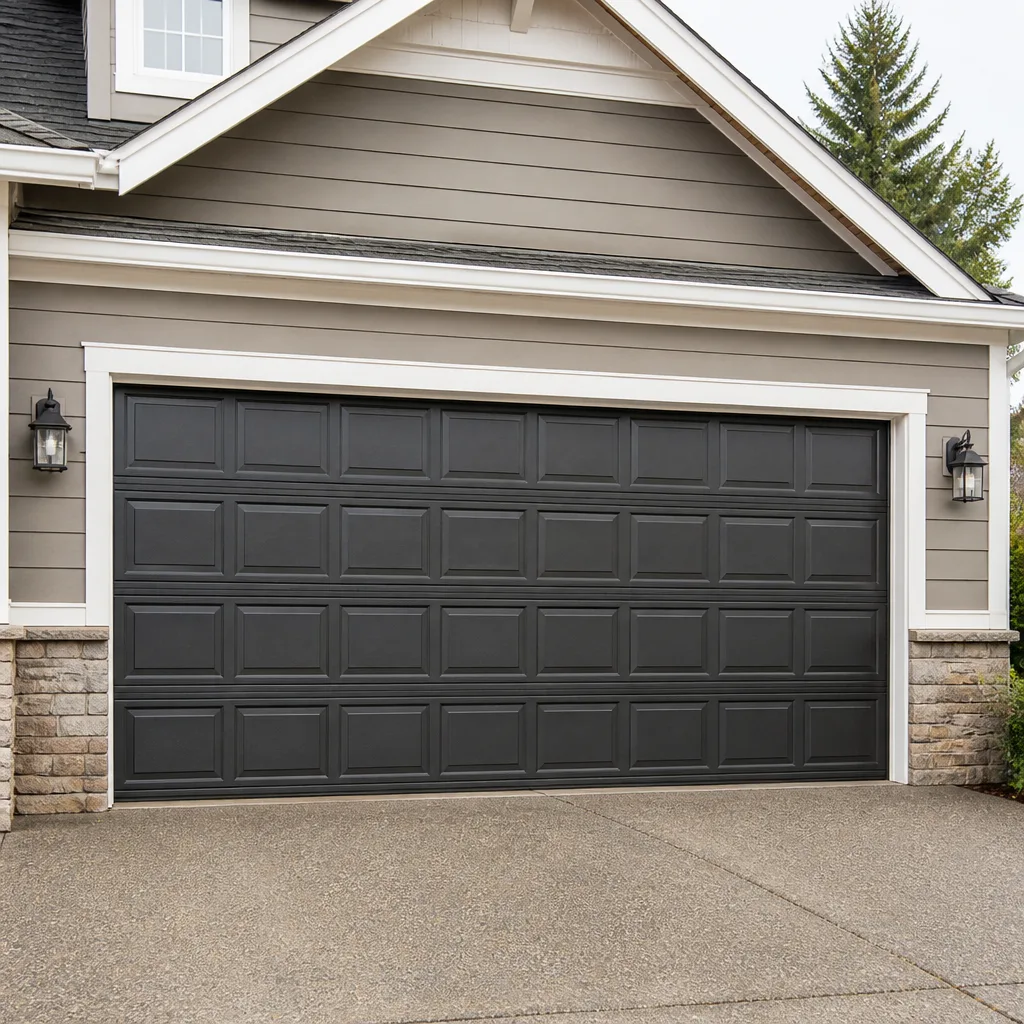 Raised-panel steel
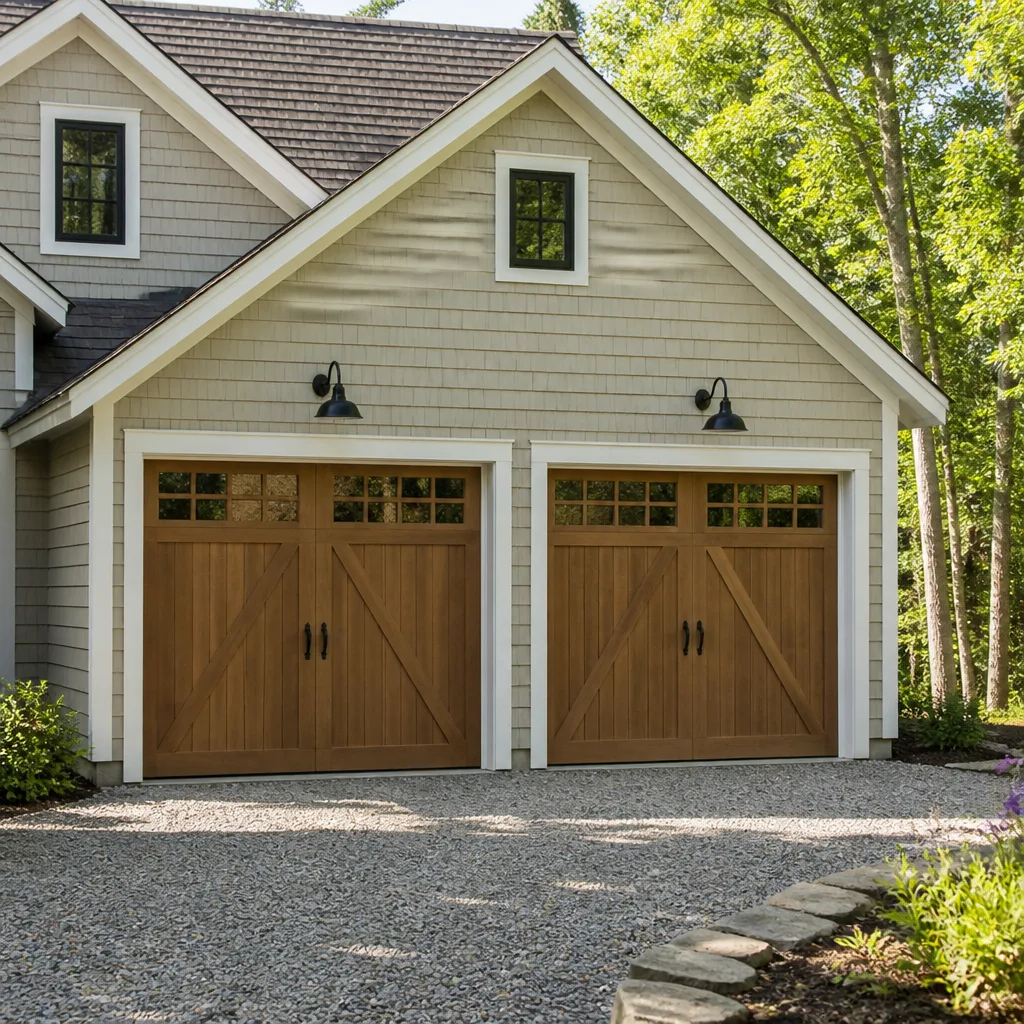 Carriage house
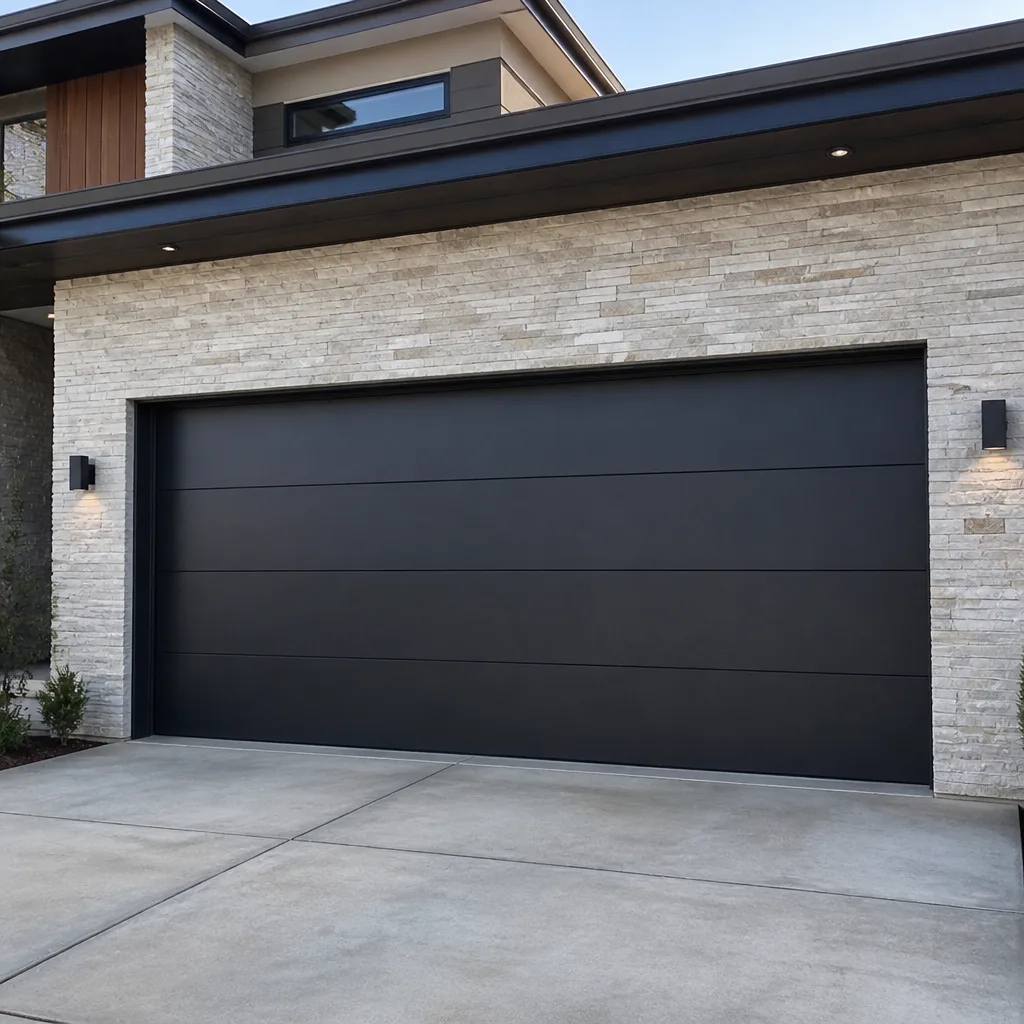 Modern flush
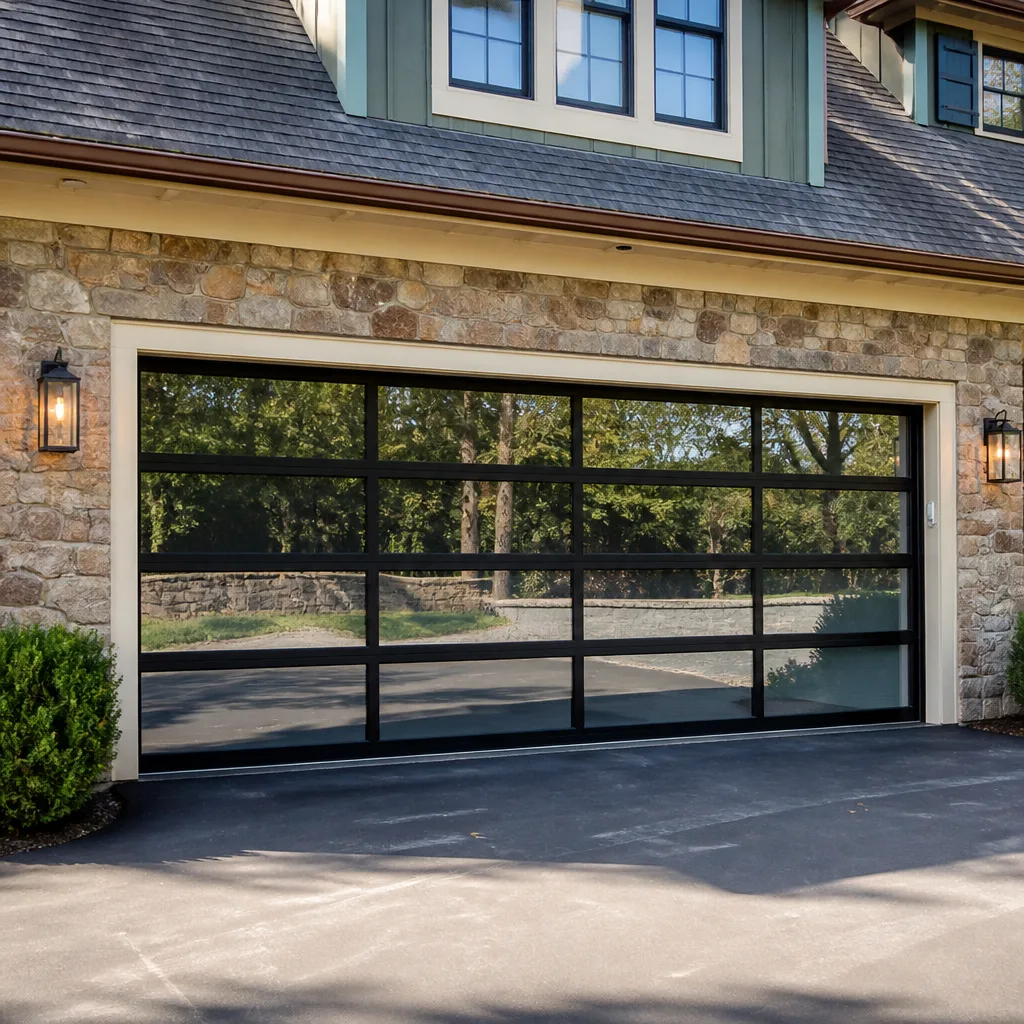 Full-view glass
 LiftMaster openers
 Chamberlain openers
Full 25-point door and opener safety check with every visit - springs, cables, rollers, tracks, and your LiftMaster or Chamberlain opener included
You get a price before we start. It does not change when the pro arrives.
Get your free estimateSeasonal Garage Door Care for Avondale: Year-Round Homeowner’s Guide
If your garage door maintenance guide mentions preparing for winter frost, it was not written for Avondale. Most national checklists assume four equal seasons, a snowy February, and a spring thaw that never arrives. Avondale runs on a different clock. Summer here is not a season; it is a six-month stretch of heat that reshapes how metal expands, how rubber dries, and how dust settles into every moving part. Then comes the haboob window, then a mild stretch that most homeowners treat as a break when it’s actually the best window of the year to get ahead. This guide follows the real Avondale calendar instead of a template – what to check, when to check it, and why the timing matters.
Quick Answer
Seasonal garage door care in Avondale follows three real seasons, not four: pre-summer prep in April, monsoon and dust season from July through September, and a mild November-through-February window that’s the best time of year for lubrication and non-urgent repairs. The tasks that matter most here are weather seal inspection before heat locks them in, dust flushing of rollers and tracks after haboob season, and UV protection for rubber and painted steel year-round. Skip the freeze-and-thaw content you’ll find on most national sites; none of it applies to this valley.
Styles & brands we work with
- Raised-panel steel
- Carriage house
- Modern flush
- Full-view glass
- LiftMaster openers
- Chamberlain openers
Table of Contents
- Why Avondale’s Garage Door Calendar Doesn’t Match a National Checklist
- April: Pre-Summer Prep Before Temperatures Lock In
- July Through September: Monsoon and Haboob Season
- October: The Post-Monsoon Reset
- November Through February: The Mild Winter Window
- Year-Round UV Protection for Rubber and Painted Steel
- Opener Care Through the Avondale Year
- A Simple Monthly Walk-Around Checklist
Why Avondale’s Garage Door Calendar Doesn’t Match a National Checklist
Garage doors expand and contract with temperature, and in most of the country that expansion happens gradually across four moderate seasons. In Avondale, it happens hard and fast. A door that sits at a comfortable morning temperature in April can be too hot to hold your hand against by June, and that repeated swing from mild mornings to brutal afternoons is what wears on seals, springs, and opener components. The heat doesn’t just make things hot; it changes the tolerances your door operates within.
The second thing national guides miss is dust. Fine desert dust is not the same as dirt. It is abrasive, it is everywhere, and it works its way into every roller, hinge, and track channel in a way that a suburban driveway in Ohio will never see. A springtime maintenance schedule built for leaves and pollen does not account for what two months of haboob-driven dust does to moving hardware.
What Avondale actually has is three working seasons:
- A short shoulder (roughly March through May) when temperatures are climbing and the door is still comfortable to work on. This is preparation season.
- The long heat and dust stretch (June through September) when summer heat locks in and the monsoon window opens. This is monitoring season.
- A genuine mild winter (roughly November through February) when the door is cool to the touch, lubrication holds longer, and non-urgent work makes the most sense. This is repair season.
If you understand those three windows, everything else in this guide makes sense. Treat the fourth season – the pretend winter from a national checklist – as noise. For a full list of what we cover in Avondale year-round, see our Avondale service overview.
April: Pre-Summer Prep Before Temperatures Lock In
April is the most useful month on the Avondale garage door calendar, and it is also the one most homeowners skip. This is the last stretch where you can work comfortably on the door, and where a small fix takes effect before summer heat makes everything worse. The single most important task is a weather seal inspection, done before the seal gets hot enough to stretch, bind, or stick to the floor.
Here’s what the pre-summer prep covers:
- Weather seal inspection. Run your hand along the bottom seal with the door closed. Any gap, crack, hardened section, or tear will let in hot air, dust, and pests for six months. Replace now, not in July, because replacing a seal on hot pavement is unpleasant and easier to postpone into next year.
- Opener motor ventilation check. Openers sit in a garage that will be significantly warmer than outside by midday. Clean any accumulated dust off the motor housing and confirm nothing is stacked against it. LiftMaster and Chamberlain units, in particular, are designed to vent through their housing, and a blocked motor runs hotter than it should all summer.
- Spring tension baseline. Note how the door feels when you lift it by hand (with the opener disconnected, and only if you’re comfortable and careful about the spring and cable underneath). If the door feels noticeably heavier than it did a year ago, you want that on your radar before heat expansion adds more strain. A trained technician can measure spring tension accurately – more on that below.
- Track and roller check. With the door down, look for any debris in the tracks, any bend or looseness, and any roller that wobbles or looks worn. Do this before the dust season, because a worn roller plus desert dust is a wear combination you don’t want.
- Panel and hardware inspection. Walk the door looking for loose hinges, missing bolts, or panel damage. Tighten what’s loose and flag anything you can’t fix.
If you want a professional set of eyes on this before summer locks in, a garage door repair call in April is well-timed. It’s the difference between catching a worn part in mild weather and catching the same part after it fails on the worst day of the year.
Why the Timing Matters More Than the Task
Most of these tasks are simple. The problem is that in Avondale, they get pushed to June, when the garage hits triple digits by mid-morning and every task takes twice as long, or to August, when the dust has already done its damage. April is temperate enough to actually do the work, and early enough that any fix is in place before the season that would break it.
What a Pre-Summer Professional Check Adds
A technician who already knows your brand can spot things a homeowner walk-around misses – a seal that’s about to fail but doesn’t show it yet, a spring that’s lost tension without breaking, a roller that’s fine now but won’t be by September. That is what makes a spring baseline useful. You want a number to compare against in a few months, not just a general impression.
July Through September: Monsoon and Haboob Season
This is the stretch that no national garage door guide covers well, because no other part of the country has anything quite like it. Haboobs – the dust walls that roll in during monsoon season – carry fine desert dust that settles into every crevice of your garage door hardware. Over 60 days, that dust does real wear to rollers and tracks. It acts like an abrasive paste rather than ordinary grime, and the more it builds up, the more friction your door has to overcome to open and close.
What fine desert dust does over those 60 days:
- Coats rollers. Dust mixes with existing lubricant to form a gritty film that grinds inside the roller as it rotates. A roller that once moved smoothly starts to drag, then to rumble.
- Lines the tracks. The vertical and horizontal track channels collect dust on their inner surfaces, which increases friction every time the door runs.
- Gums up hinges and pivot points. Same problem, smaller scale – and often the first thing that starts to squeak.
- Wears on the opener. A door that takes more effort to lift needs more effort from the opener, which puts the motor under more load than it was designed for. A Genie or LiftMaster unit running against extra resistance will not fail gracefully.
The important part is how to clean it without introducing moisture. This is the mistake we see most often during monsoon season: homeowners spray down the tracks with a garden hose, and the water turns that dust into a paste that pushes into the rollers and hardens. Dry cleaning is the rule here.
- Brush out the tracks dry. A stiff hand brush or a shop vacuum with a narrow nozzle does the job. Work top to bottom on the vertical track, then the horizontal.
- Wipe the rollers, don’t rinse them. A dry cloth or a very lightly dampened one, followed by immediate drying, is fine. Soaking is not.
- Re-lubricate after cleaning, not before. Cleaning before lubing prevents the problem where fresh lubricant seals dust against the roller surface. Use a garage-door-specific lubricant, not WD-40 as a lubricant, and not household grease.
- Check the bottom seal again. Monsoon winds and airborne grit can work their way into a seal that looked fine in April.
If a haboob brings debris that dents or chips a panel, don’t ignore it. Small impact marks in sheet steel can develop into micro-cracks, which are covered in the October section below. If the door is stuck, dragging, or making new noises during this stretch, our Hawk Garage Door Repair team can take a look – a dragging door in July rarely fixes itself by September.
October: The Post-Monsoon Reset
October is the reset month. The heat is easing, the dust season is largely over, and the door has just come through two or three months of wind stress, dust, and temperature extremes. This is the point where you want a full hardware inspection rather than a targeted check, because the door has absorbed enough to justify looking at everything.
Here is what the October reset covers:
- Full hardware inspection. Every hinge, roller, bracket, and fastener. Look for loose bolts, worn bushings, unusual play, and rust – and in Avondale, remember that whatever the door ingested in the dust season is still sitting in it. A proper inspection includes the cleaning step before you start tightening anything.
- Micro-crack inspection on panels. This is the one most homeowners miss. Impact damage from airborne debris during a haboob can leave small cracks in the panel that don’t look serious in October but can grow over the following summer. Look at panel edges, along the seams, and around any dent or chip you can remember from the season. If you find a hairline crack in a steel panel, mark it and get it checked before next summer.
- Spring and cable inspection. The springs and cables have gone through a full heat cycle and heavy use. Look for any visible fraying in the cables, uneven spring gaps, or rust at the spring anchor points. If anything looks off, get it looked at by a trained technician – see the safety note below.
- Track alignment. Wind can push a panel slightly off-line. Check that the vertical tracks are straight and the horizontal tracks are level. Any binding when you lift the door by hand is a signal.
- Weatherstrip refresh. If the seal took on grit and heat over the summer, this is a natural replacement point – before the relative cool of winter firms up what you’re working around.
Why October Is Also a Good Diagnostic Window
The reason the reset matters is not just cleaning – it is finding out what the summer did. A worn roller in October is a cheap fix. The same worn roller in July is a door that stops opening in the hot part of the day, and a replacement opener bill on top of it. Getting a sharp read on the door in October buys you the whole mild-season stretch to plan the work.
Safety note on springs and cables: if you find anything wrong with the springs, cables, or anchor points, do not attempt to adjust or replace them yourself. Garage door springs are under extreme tension and are genuinely dangerous to handle, and that risk doesn’t shrink because the door is a residential one. This is work for a trained professional. Same goes for any electrical work inside the opener housing or on a wall-mounted control – leave it to a technician.
November Through February: The Mild Winter Window
Winter is the season most Avondale homeowners think of as the slow season. In practice it is the most useful one. The garage is cool, the door is comfortable to work on, and – this is the important part – lubrication actually holds. In the heat of summer, a fresh coat of lubricant on rollers and hinges cooks off in weeks. In the mild winter stretch, it stays put for months, which means one winter lubrication protects the door through more of the year than the same task done in June.
Here’s what makes the mild window the right time:
- Lubrication holds. Apply a garage-door-specific lubricant to rollers, hinges, springs (on the coil surfaces only, not the winding mechanism), and the opener’s rail or chain. In the cooler months it stays where you put it.
- Non-urgent repairs are easier to plan. If October’s inspection flagged a worn part, replacing it in the winter means the door goes into next summer fresh. There is no urgency and no heat.
- Panel work is comfortable. If a panel needs repair, refinishing, or replacement, cool weather is easier on both the technician and the finish.
- Openers get the attention they deserve. A trained technician can service the opener, check the force settings, clean the motor, and confirm the travel limits are set correctly – all easier when the garage is a workable temperature.
- Battery and backup checks. If your opener has a battery backup, this is the natural time to test and replace it. Same for remote batteries.
If your door was making noises in August and you’ve been meaning to deal with it, this is the window. Winter work means the fix is in place before the summer that would test it. Our garage door opener repair service handles openers as their own specialty, because most opener problems are not door problems, and a technician who knows the difference saves you both time and money.
Why You Should Still Lubricate in Summer
To be clear, we are not saying “lubricate once in winter and forget it.” If the door starts squeaking in July, it needs attention in July. What we’re saying is that the winter lubrication is the one that actually lasts, and the summer top-ups are smaller and more frequent. In practice, most Avondale doors want a full lubrication once in the winter window and a spot-check on hinges and rollers mid-summer, particularly after a heavy dust event.
Year-Round UV Protection for Rubber and Painted Steel
Avondale’s solar intensity is a year-round issue, not a summer one. It is the single biggest factor in how long your weather seal and painted steel surface last. Rubber seals dry, harden, and crack under sustained UV exposure, and painted steel fades and oxidizes over time. The problem is not that UV does dramatic damage in a single season – it is that it does steady damage every single day, and the cumulative effect shows up as a brittle seal and a chalky panel.
What you can do about it:
- Apply a UV protectant to rubber seals. A silicone-based rubber protectant, applied once or twice a year, keeps the rubber supple and slows the drying that leads to cracking. Clean the seal first, then apply a thin coat and wipe off any excess. This is not a permanent fix, but it extends the life of the seal significantly.
- Wax or seal painted steel panels. A quality automotive-style wax applied to painted steel panels gives you a sacrificial UV layer that fades before the paint does. Reapply in the mild winter months and again in late spring before the heaviest sun. This is particularly worth doing on Clopay steel panels with a factory finish, because the finish is good but not UV-immune.
- Keep the seal clean. Dust on the rubber dries it out faster, because the grit and the UV work together. A wipe-down with a dry cloth after any dust event helps.
- Park uphill. If your driveway slopes and there’s a way to park out of full sun on one side of the garage, use it. The difference between a garage door in full afternoon sun and one that gets shade for part of the day is real.
- Consider a lighter finish at replacement time. If you’re installing a new door, a lighter panel color reflects more solar energy than a dark one. That’s a consideration worth weighing for a west-facing door in Avondale.
If the seal on your door is past protecting, replacing it is the fix. Our garage door repair service covers seal replacement as a routine job. And when a door is at the end of its useful life, a proper garage door repair evaluation tells you honestly whether repair or replacement is the better answer.
Opener Care Through the Avondale Year
The opener is the most failure-prone component of the garage door system, and it goes through a hard year in Avondale. It runs against a door that is fighting dust, heat expansion, and sun-dried seals. A door that takes extra effort to lift asks the opener to do extra work, and the opener is designed to lift a well-running door, not a struggling one.
What the opener needs across the year:
- Force settings checked. Any change in how hard the door runs – a new seal, a tightening track, a worn roller – shifts the force settings. If the opener is set for the original door resistance and the door has gotten harder to move, the opener works harder and lives shorter. This is a check a technician should do.
- Motor ventilation. Clear dust off the motor housing in April and again in October. In Avondale’s heat, a motor venting through a dust-clogged housing does not last.
- Battery backup test. Test the safety reverse and the battery backup in the winter window. A battery that tested fine in December may not survive an August without use – better to know in November than afterward.
- Safety reverse test. Place a small object in the door’s path and confirm the door reverses. Do this monthly – it takes 30 seconds and it is the single most important safety check you can do.
- Remote and wall-panel batteries. Swap these out in the mild window before they fail.
A Genie or Chamberlain opener that’s been running against a struggling door is a common finding in our Avondale service calls. Most of the time the opener is fine – the door is the problem, and it’s been quietly dragging for months. Our technicians have up to 15 years of experience working on the most widely installed brands, so they already know your system before they arrive. See our dedicated garage door opener repair page for more on how we handle opener-specific calls.
A Simple Monthly Walk-Around Checklist
Between the seasonal tasks, a monthly 10-minute walk-around catches most developing problems before they turn into breakdowns. It’s the single easiest garage door habit to build.
- Safety reverse test. Close the door on a small object and confirm it reverses. If it doesn’t, stop using the door until it’s checked.
- Visual spring check. Look at the springs from a safe distance. A broken spring is usually obvious from a gap in the coil. Never touch or try to adjust the spring.
- Roller sound floor test. Open and close the door and listen. New squeaks, grinds, or rumbles matter.
- Track check. Look at the vertical tracks for visible debris or bends. Clear debris dry.
- Weatherstrip gap check. Close the door and look for daylight under the bottom seal. Any daylight is a gap.
- Panel and hardware walk. Eyeball the panels for new dents or chips, and look at the hinges and brackets for anything loose.
- Opener check. Listen to the opener during a cycle for new noises, and check that the lights and remotes work.
Common Mistakes to Avoid
- Following a national seasonal checklist. Most national guides are built around frost and snow, and none of that applies in Avondale. If the guide asks you to prepare for winter, skip it and use the three-season rhythm in this piece instead.
- Hosing down the tracks during monsoon season. Wetting the tracks turns desert dust into an abrasive paste. Dry brushing is the only correct method.
- Lubricating without cleaning first. Grease over dust seals the dust against the metal. Clean first, lubricate second.
- Skipping the weather seal because it looks fine. A seal that looks intact at 70 degrees can crack the first week it hits 110. April inspection is not optional in Avondale.
- Ignoring a dent or chip in a panel. Small impact damage from a haboob is easy to shrug off, but it’s the seed of a micro-crack. Mark it and get it checked.
- Adjusting the springs yourself. Garage door springs are under extreme tension and are dangerous to handle. A homeowner adjusting a spring is a real injury risk, and the work is not a DIY task.
- Assuming the opener is the problem. Most opener problems are actually door problems – a dragging door makes a healthy opener look broken. Diagnose the door first.
- Doing heavy maintenance in June or July. The task that would take an hour in November takes three in July, and the finish quality is worse. Use the mild window.
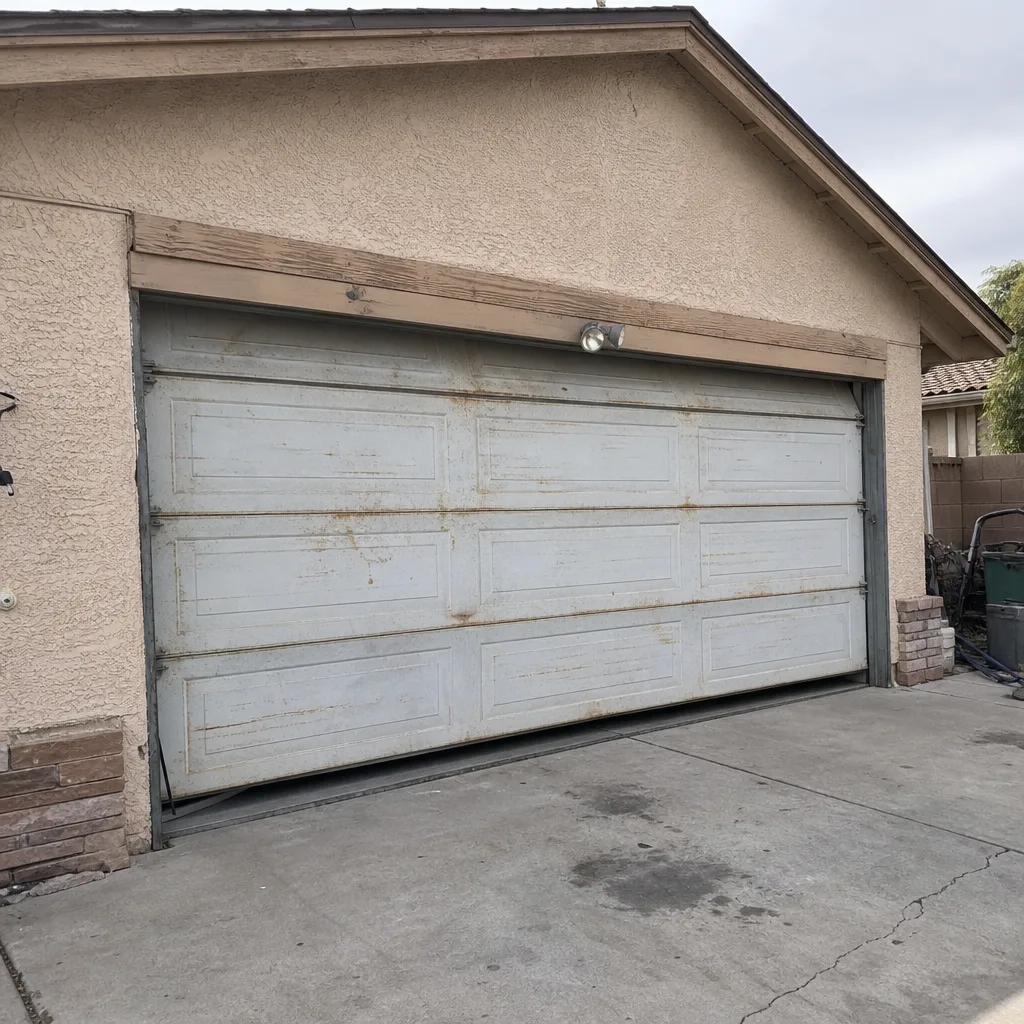
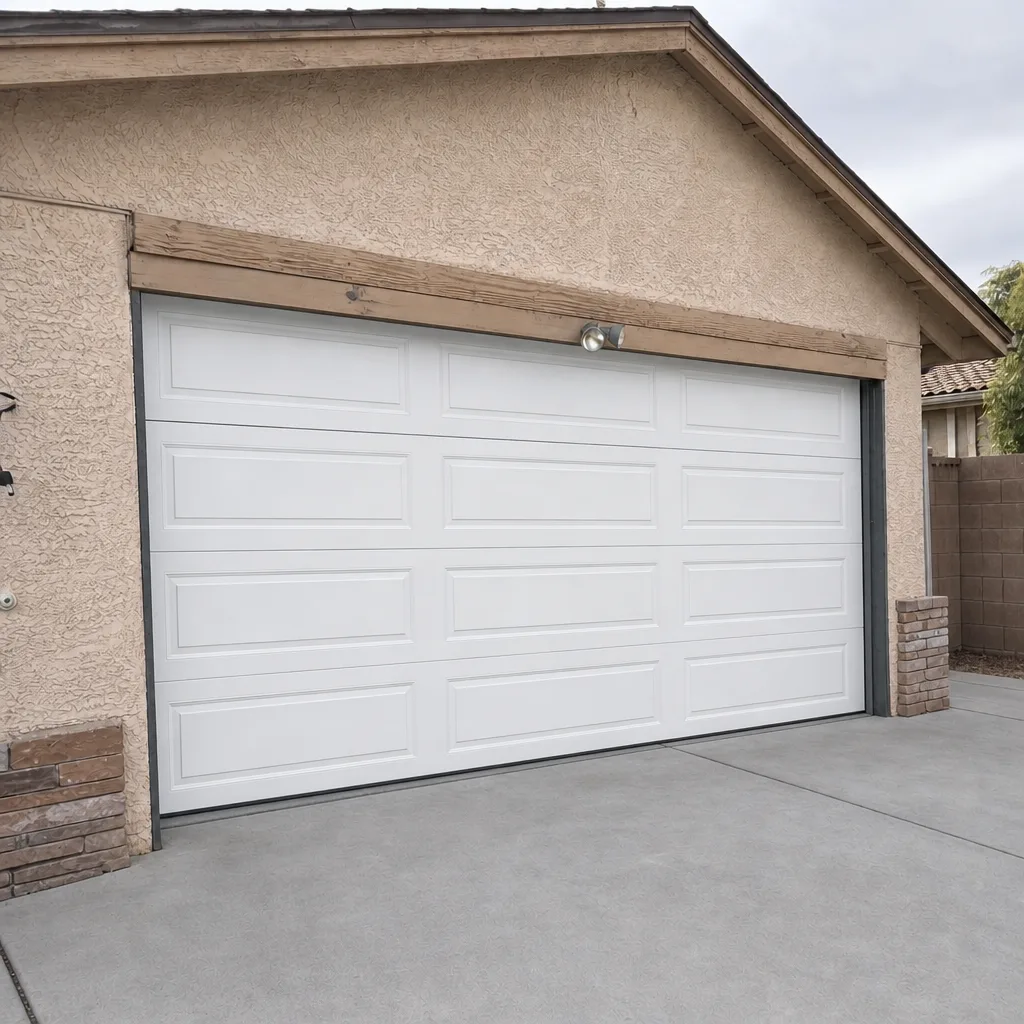
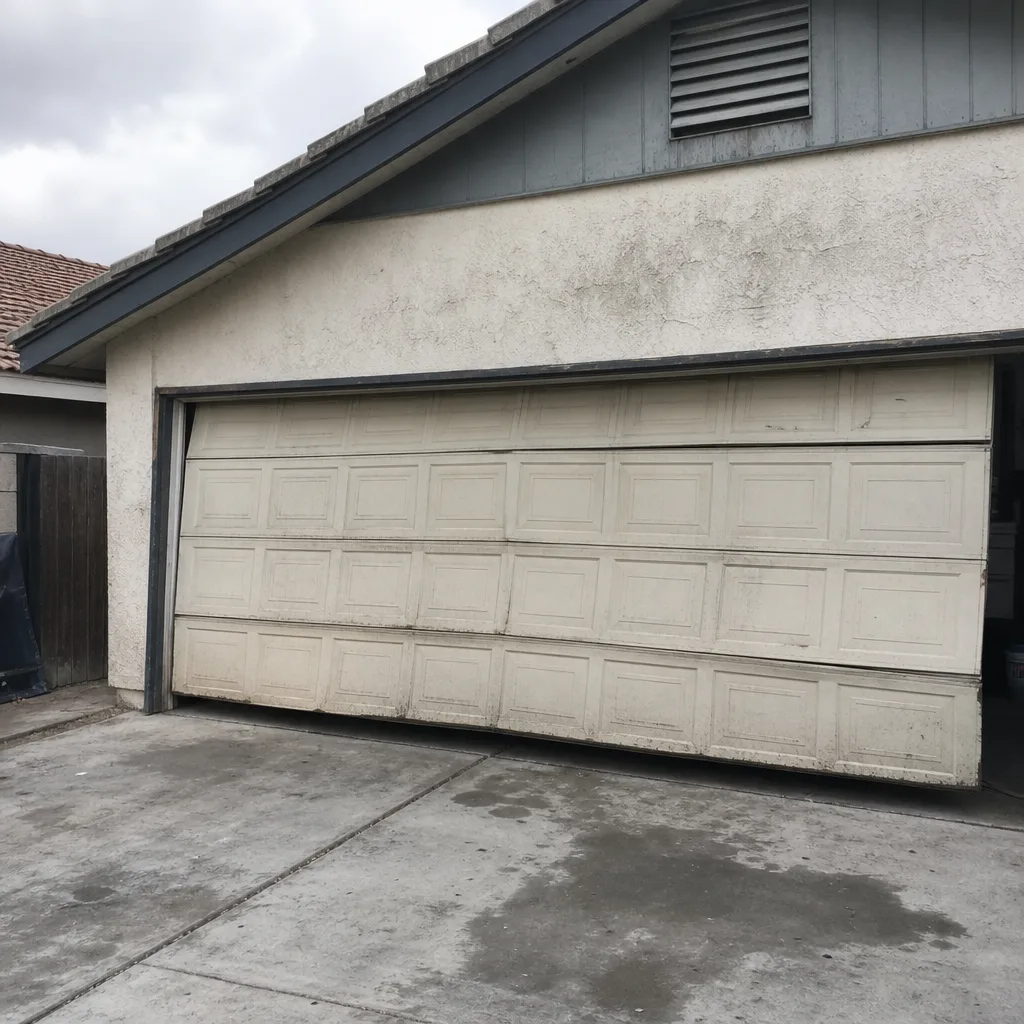
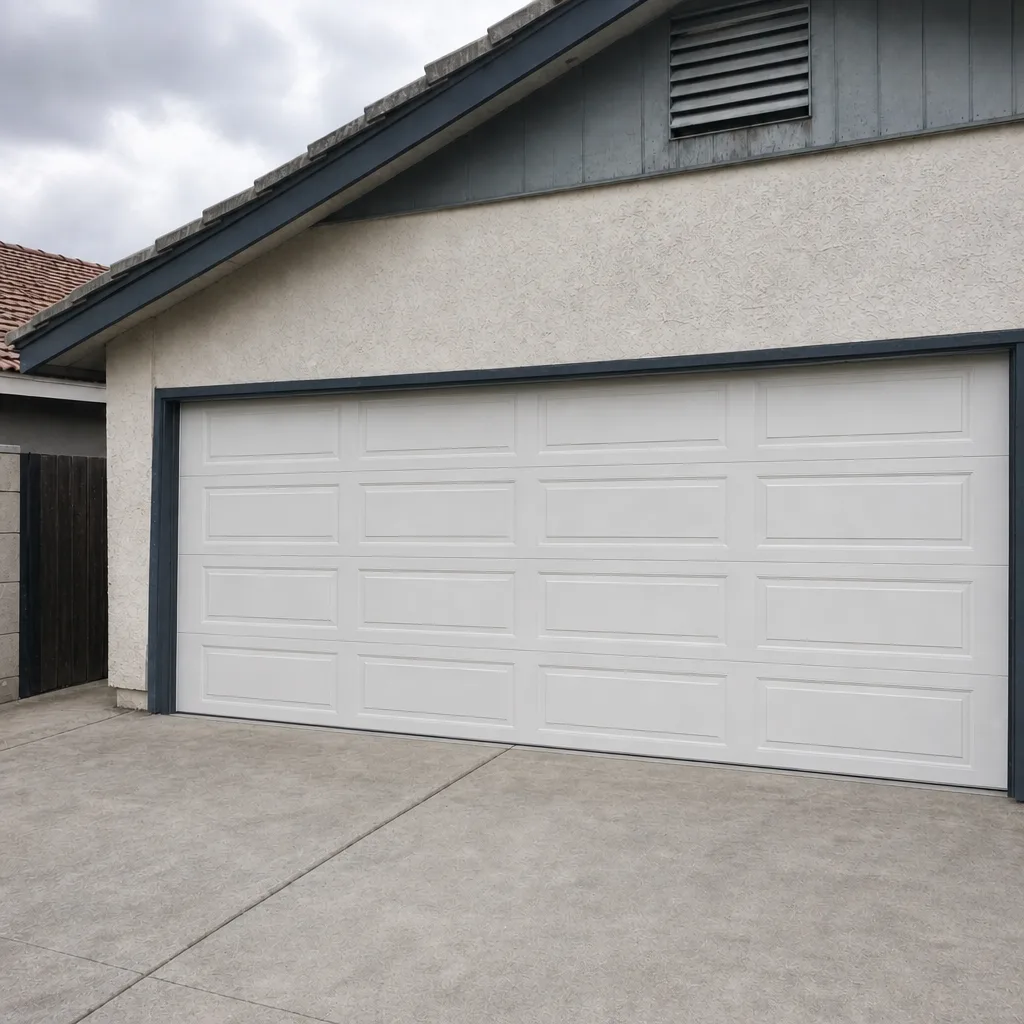
See the difference
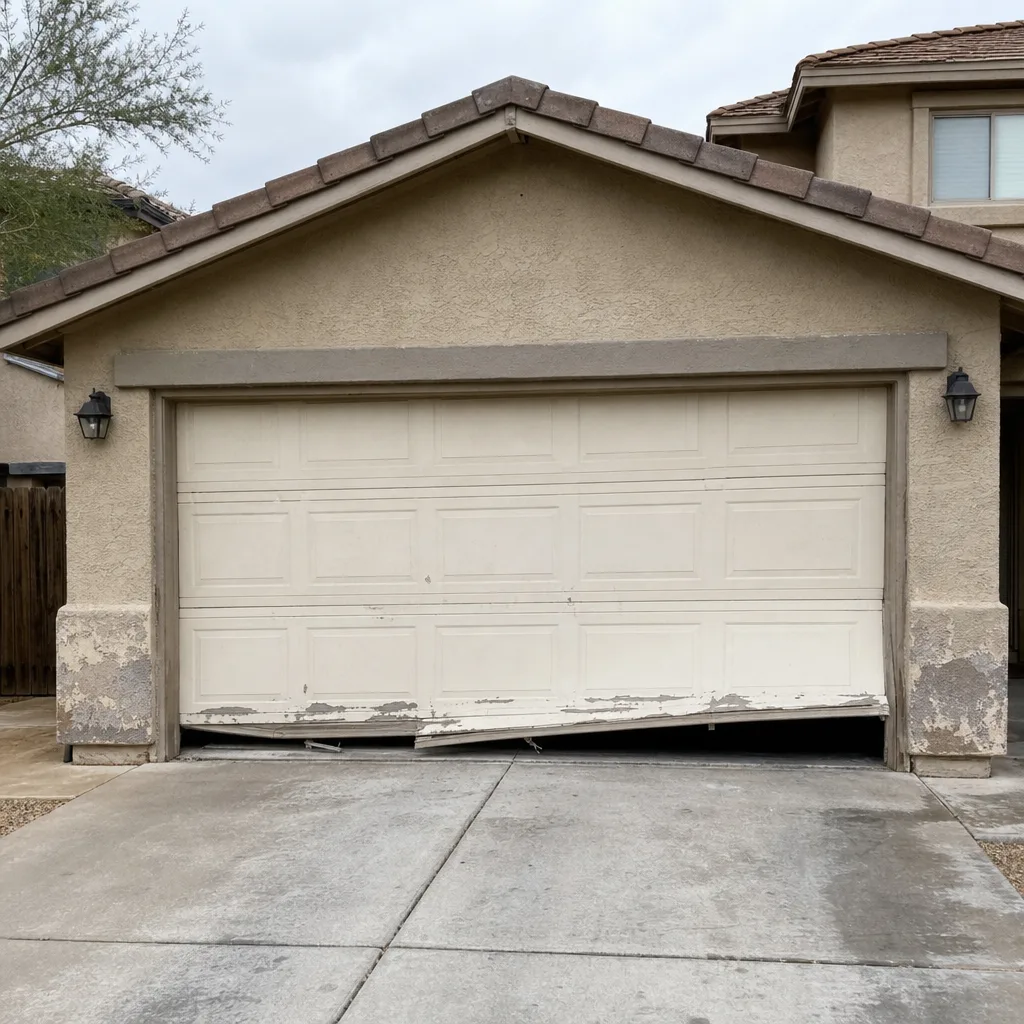 Before
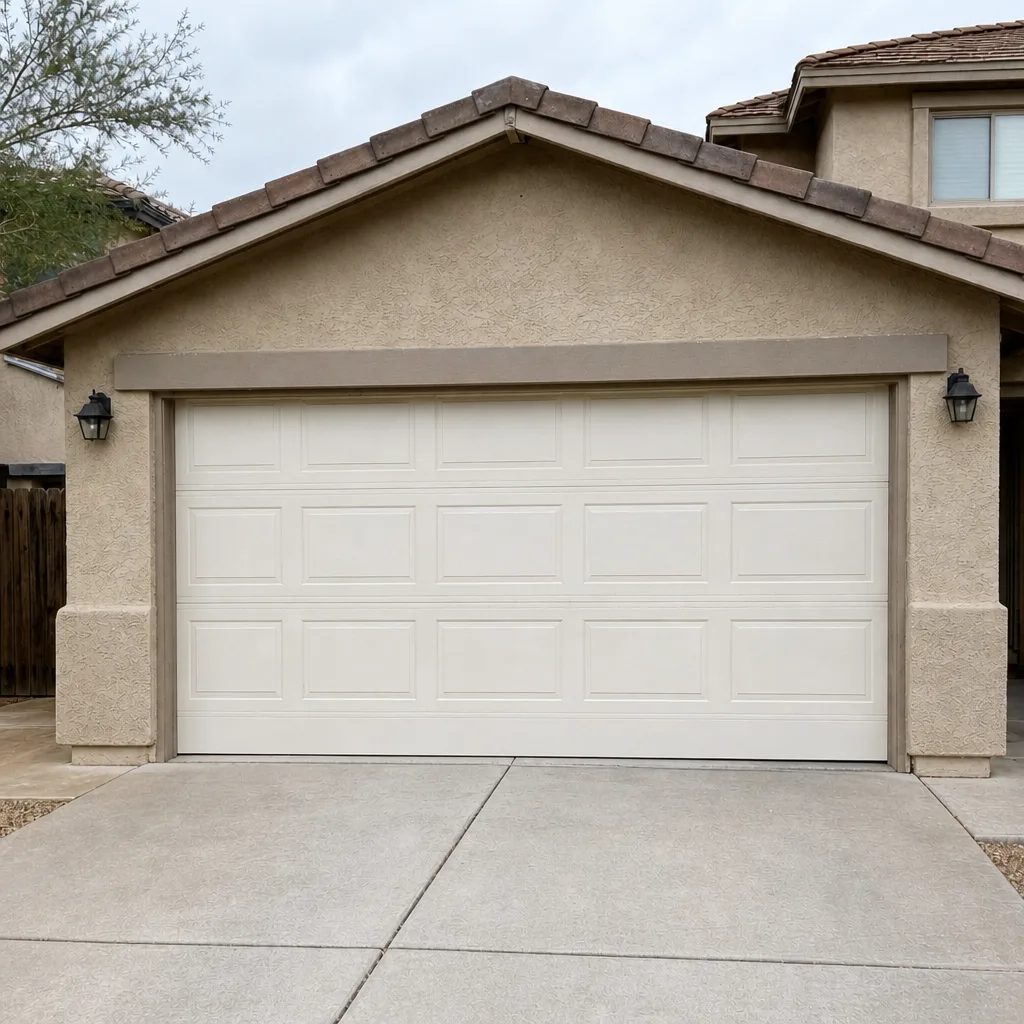 After
 Before
 After
 Before
 After
When to Call a Professional
Most of the checklist work in this guide is well within reach for a homeowner with a few basic tools – tracking down a squeak, wiping down the tracks, inspecting the seal, and running the safety reverse test. The line to call a professional is drawn at the tasks where the risk shifts from “annoying” to “dangerous,” or where the diagnosis needs to be accurate rather than guessed.
Call for these:
- Any spring or cable issue. This is the number one reason to call. Springs and cables are under extreme tension and are dangerous to work on. Do not attempt it.
- Anything inside the opener housing or on the wall-mounted control. Electrical work on a garage door opener is a trained-technician task.
- A door that reverses incorrectly, or one that won’t reverse. This is a safety issue, not a convenience one.
- A door that is visibly out of alignment, damaged, or making new grinding or rumbling sounds. Diagnosis matters here, and a wrong call can make a small problem into a large one.
- A door that has never been serviced and is more than a few years old. A baseline inspection by a technician gives you a real read on the whole system.
Hawk Garage Door Repair offers free estimates in Avondale. Call (877) 824-4815. We answer 24/7. Fast dispatch from 7am to 7pm, Sunday through Friday. The written estimate sets the price, and the price is set per job before any work begins.
Frequently Asked Questions
The best window is November through February, when the mild temperatures let lubricants last longer and non-urgent repairs are easier to schedule. April is the second-best window, because it’s your last comfortable stretch before summer heat locks in. If the door has a problem, don’t wait for a season – call (877) 824-4815 for a free estimate.
Clean the tracks dry once a week during July through September, or after any significant dust event. Use a stiff brush or shop vacuum, never water, because wet dust turns into an abrasive paste. Re-lubricate after cleaning. If the door starts dragging, call (877) 824-4815.
Yes. Sustained UV exposure and high temperatures dry out and crack rubber weather seals faster here than in most parts of the country. A seal that looks fine in April can be brittle by July. Inspect the seal in April and again in October, and apply a silicone-based protectant twice a year.
Yes, for rollers, hinges, and the opener rail or chain. Use a garage-door-specific lubricant, and never use WD-40 or household grease as a lubricant. Do not lubricate or adjust the spring winding mechanism – call (877) 824-4815 for that.
Start by checking the safety reverse (small object in the path) and looking at the tracks for visible debris. Clean the tracks dry and re-check. If the door still won’t open, or makes grinding or rumbling noises, call (877) 824-4815 for a same-day repair estimate.
Yes, for repair calls. We answer 24/7 and dispatch Sunday through Friday, 7am to 7pm. Installation and non-urgent work is measured and scheduled, so call (877) 824-4815 for a free written estimate.
The Bottom Line
Seasonal garage door care in Avondale is not a four-season template – it’s a three-season rhythm. April is preparation, before heat locks in. July through September is dust management, cleaned dry. October is the reset, when you find out what the summer did. And November through February is the mild window when lubrication holds and non-urgent repairs make sense. Wrap those three with year-round UV protection on your seals and painted steel, and a monthly walk-around, and your door will outlast the checklist that was written for a different climate. If you want a technician to check your baseline before summer, our team can help – free estimates, sharp diagnosis, straight answer. Call (877) 824-4815. We answer 24/7. Fast dispatch from 7am to 7pm, Sunday through Friday.
Written by the team at Hawk Garage Door Repair.