
Last updated November 15, 2026
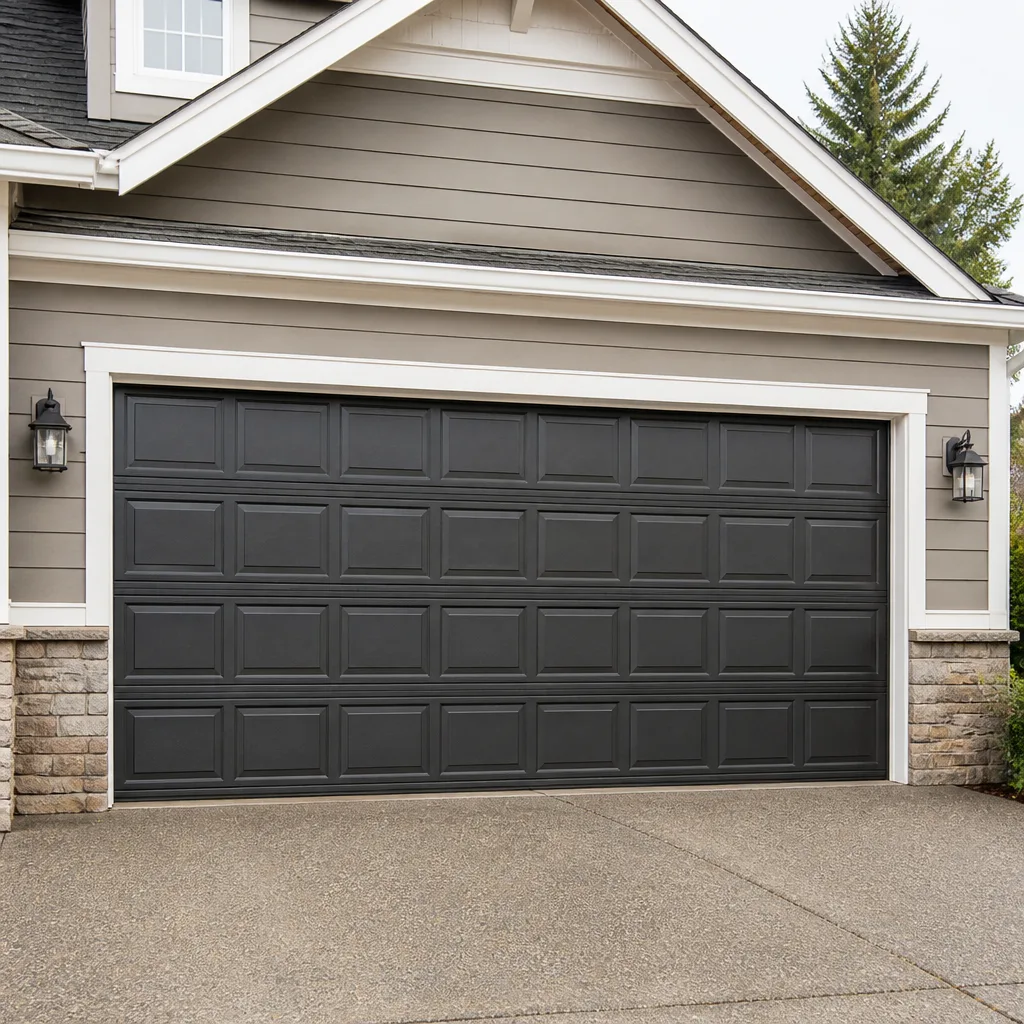 Raised-panel steel
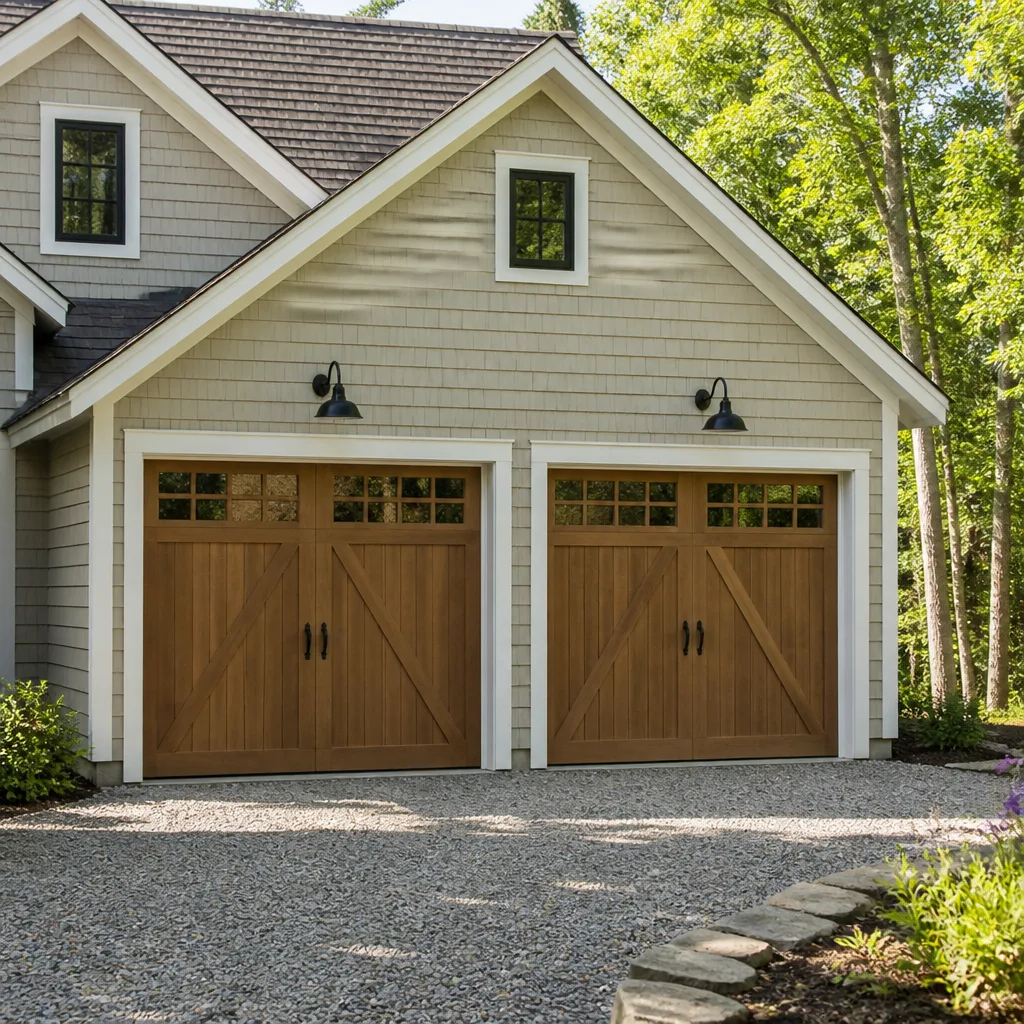 Carriage house
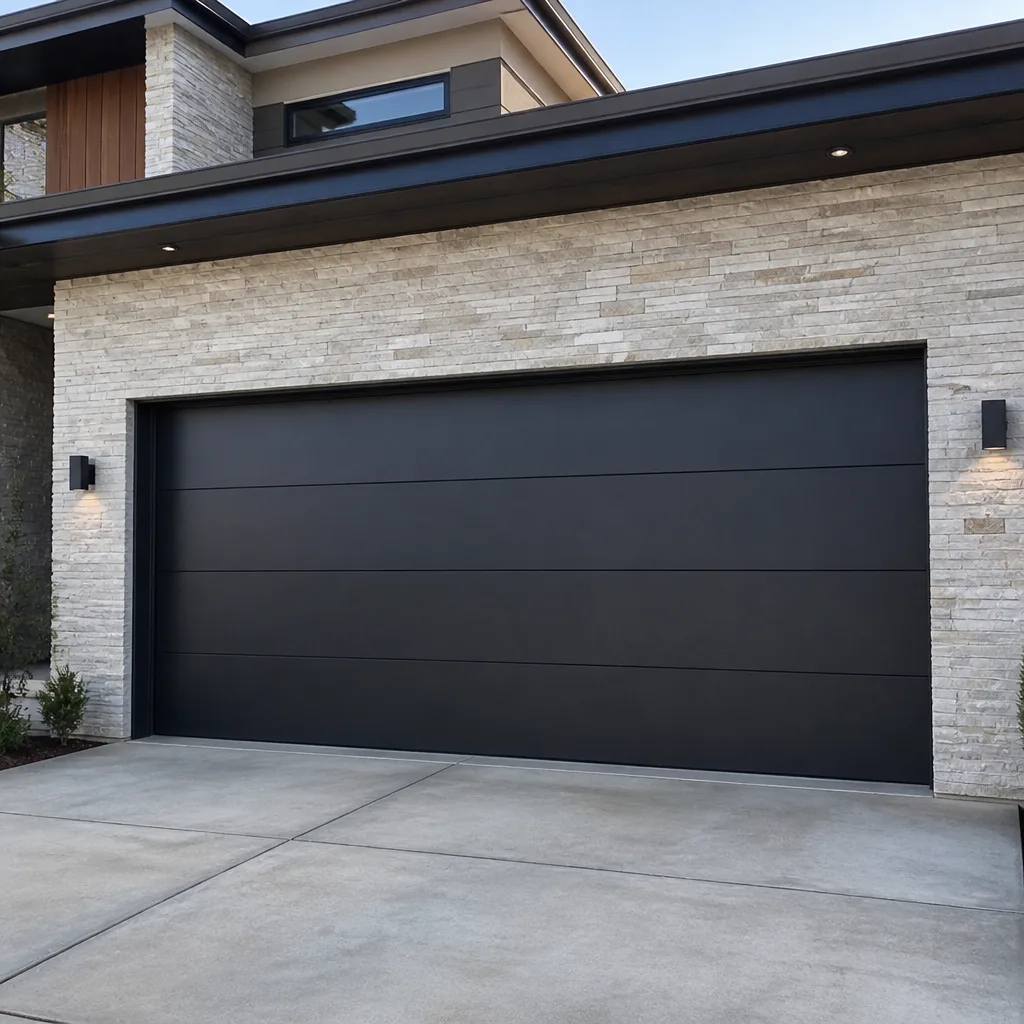 Modern flush
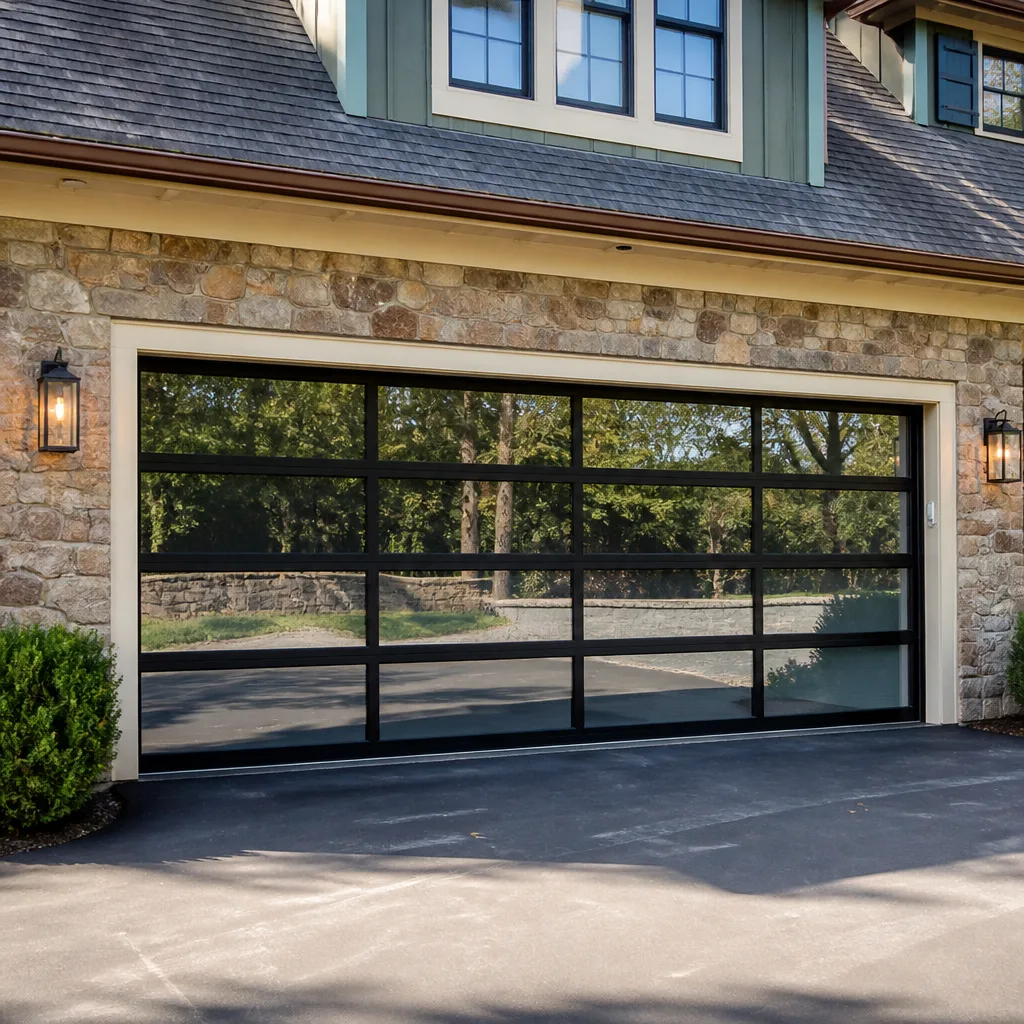 Full-view glass
 LiftMaster openers
 Chamberlain openers
Full 25-point door and opener safety check with every visit - springs, cables, rollers, tracks, and your LiftMaster or Chamberlain opener included
You get a price before we start. It does not change when the pro arrives.
Get your free estimateGarage Door Emergency Preparedness Guide for Avondale Homes
Most garage door emergencies in Avondale aren’t really emergencies. They’re predictable events that caught a homeowner without a plan. The haboob that fills the air with grit every summer, the power cut on a 115-degree afternoon, the torsion spring that lets go while the car is parked inside – none of these are surprises. They’re the same handful of failures, in the same order, across the same neighborhoods. What changes the outcome is the first sixty seconds: whether you know how to release the door from the opener, whether you check the tracks before you force a damaged panel, whether you can get the car out without dropping the door on it. This guide walks through each of those scenarios with a step-by-step response plan, so the next time something fails at your Avondale home, you’re working from preparation rather than panic.
Quick Answer
The core of garage door emergency preparedness in Avondale is knowledge of three things: how to disengage the opener and lift the door by hand, what to inspect from a safe distance after a windstorm before you press the button, and what information to have ready when you call for help. Preventable damage usually comes from forcing a door that should be left alone until a technician arrives. If you’re facing a broken spring, a door off its tracks, or an opener that won’t respond, calling a professional before you touch anything is the fastest way to a safe repair.
Styles & brands we work with
- Raised-panel steel
- Carriage house
- Modern flush
- Full-view glass
- LiftMaster openers
- Chamberlain openers
Table of Contents
- Manual Override: How to Open Your Door During a Power Outage
- Why Avondale Power Outages and Garage Door Failures Line Up
- Post-Haboob Structural Check: What to Inspect Before You Operate the Door
- When a Spring Snaps: Containment and the Safe Manual Lift
- Opener Failures That Look Like Door Failures
- What to Have Ready Before You Call
- Seasonal Checks That Prevent Most Emergencies
- Frequently Asked Questions
Manual Override: How to Open Your Door During a Power Outage
A garage door will open by hand if you disengage the opener correctly. The manual release is a red pull cord hanging from the opener’s trolley. Pulling it releases the door from the motor so you can lift it yourself. But there’s a sequence to it, and the sequence matters because a door with a broken spring, a jammed track, or a damaged cable can come down hard once the opener no longer holds it.
Here’s the way to do it safely:
- First, check whether the door is holding itself up. If the door is already fully closed and the springs look intact and connected, the door should be balanced enough to lift. If you can see a visibly broken spring (an open gap in the coil) or a cable hanging off its drum, stop. Do not pull the release.
- Have a second person ready. If you can’t stand directly under the door and push it up using both hands while keeping your body clear, don’t try to lift it alone. Ask someone to help.
- Pull the release cord straight down. You’ll feel a click as the trolley disengages. Don’t yank it; a steady pull works.
- Lift the door slowly with both hands, one on each side. If a spring is intact, the door should rise easily to about chest height and stay there when you let go. If it feels heavy on the way up or starts to fall, stop and lower it back down slowly with your helper.
- Prop it open only with a door that holds its position. If you have to move a vehicle out, get the vehicle out first. Don’t leave the door half-open and unattended.
- To reconnect, close the door fully, then pull the release cord once more to re-engage the trolley. Or press the wall button and check that the trolley catches the door on the way back down.
The most common mistake we see is pulling the release on a door with a snapped spring, assuming it will behave like a door with working springs. It won’t. Without the spring counterbalance, the full weight of the door comes down on whoever is underneath. If you’re not sure whether your springs are intact, leave the door alone and call garage door repair first. Our technicians have up to 15 years of experience diagnosing springs and cables safely.
Why Avondale Power Outages and Garage Door Failures Line Up
In Avondale, the highest indoor temperatures of the year tend to arrive on the same days the power grid is working hardest. That overlap is not a coincidence. The first 110-degree week of summer pulls air conditioners, pool pumps, and commercial cooling onto the grid at once. When a feeder trips or a transformer fails, garage doors across the neighborhood stop responding at the exact moment homeowners need to get out of a hot house.
What’s genuinely useful is preparing before that happens rather than during it. Here’s what makes a difference:
- Test the manual release once this spring. If you’ve never pulled it, do a practice run with the door down and no car inside. Learning the feel of the trolley on a calm afternoon is fundamentally different from learning it in the dark with a car trapped inside.
- Know where your vehicle is a problem. If the car with the most urgent schedule is parked inside the garage, consider parking it on the driveway from June through September. The shade savings aren’t worth the disruption if that car is your only way to a doctor’s appointment or work commute.
- Trace your opener’s backup battery. LiftMaster and Chamberlain openers sold with battery backup will hold the door for a small number of cycles without house power. If yours has one, check that it’s still holding a charge and replace the battery if the open doesn’t respond cleanly. Craftsman units from before 2018 rarely had this feature. If yours doesn’t, don’t count on it.
- Write your opener’s model number inside the door jamb. When the opener won’t run and you’re calling for help, that model number is what gets the right diagnostic parts into the technician’s hands on the first visit.
A power outage doesn’t usually cause the door to break. But an outage forces owners to use override systems for the first time, and that’s when damage happens. Manual lifting that strains a cable, a door that sags once reconnected, a torsion spring that was already on its last mile and fails under manual load. Preparing for the outage keeps it from becoming a repair bill. For opener-specific troubleshooting, garage door opener repair covers what we check when the motor is silent but the outlet is live.
Post-Haboob Structural Check: What to Inspect Before You Operate the Door
When a haboob rolls through Avondale and the wind hits fifty miles per hour, the door with the most broad surface area in your house takes the pressure. Panels flex, rollers shift in their tracks, and the brackets that hold the track to the wall can loosen under the load. What you should never do after a wind event is press the opener button to test the door. A door that suffered lateral wind load may look fine and still come off the track on the first lift.
Walk outside and look. Check these in this order, from a safe distance, before touching anything:
- Panels: Stand six feet back and sight down the vertical seams. If the door looks bowed at the center or any panel seam is wider than the panels above and below it, the door has flexed and should not be operated.
- Tracks: Look at where the vertical track meets the wall bracket. Bolts backing out by even a few threads mean the track has shifted. Look down the vertical edges too: if the track has visibly curved away from the door, it will bind the rollers.
- Cables: Cables should be taut around their drums at the top corners of the door. A cable hanging slack or off its drum can whip loose under load. Do not touch it. Cables under tension can cause severe injury.
- Bottom seal and weatherstripping: If the bottom seal has pulled away or the door has been lifted at one corner, the door may not be sealing against the floor, or the door’s balance may have shifted. That’s repairable, but you need to know before you call.
- Hinges and center stile: Look for hinges that have pulled away from the panel, and for gaps at the horizontal center stile. These point to impact load rather than gradual wear.
Haboob damage in Avondale is almost always repairable short of a panel replacement, but you need the diagnosis right. A track that looks slightly bowed will need realignment rather than replacement. A panel that’s been creased or split usually can’t be bent back. We work across Clopay, Amarr, Wayne Dalton, and other major door brands, so if you’re not sure which brand your door is, a photo of the hinge stamp or panel stamp will tell us. That matters because a Wayne Dalton panel and a Clopay panel are not interchangeable.
When a Spring Snaps: Containment and the Safe Manual Lift
A torsion spring snapping sounds like a gunshot in the garage. Then the door drops to the closed position under the remaining spring’s imbalance and everything gets quiet. If your car is inside, you have a problem: the opener won’t lift the door, and the door can’t be lifted by hand without effort. Don’t panic. Don’t run under the door. Here’s the sequence.
Step one: confirm what broke. Look at the torsion bar above the door. A snapped spring will show a clean break in the coil or the spring will have unwound and slid along the bar. Cable and drum failures look different: the cable is hanging and the drum is empty. Know which one you’re dealing with before you touch the door.
Step two: for a broken torsion spring, do not use the manual release. Pulling the red cord while a spring is snapped removes whatever balance the remaining spring still provides. The door can come down fast on the person underneath. Treat the door as fixed and immovable until a technician has replaced the spring.
Step three: if the door has a broken extension spring instead (the springs that run parallel to the horizontal track, usually two, one on each side), the door may still lift. If only one of the two springs snapped, the door will lift unevenly and may twist. Two people, one on each side, lifting in unison is the safe way. Lift to shoulder height, have the second person hold while the first walks under and puts an arm on the opposite panel, and lift together until the door is overhead. Never let the door down at speed.
Step four: if the vehicle is trapped and the door won’t lift safely, call for professional help. Replacing a torsion spring is the most dangerous repair in the garage door trade because the spring is under extreme tension even when it looks relaxed. Every year, technicians and homeowners end up in the emergency room from a winding bar or a spring that lets go during a DIY attempt. We don’t recommend any homeowner try it, regardless of what a video shows.
A spring replacement in Avondale typically costs $180 to $340 per spring, using standard torsion springs sized to your door. A matched pair of springs is usually replaced together because a single new spring next to a worn one creates uneven load on the torsion bar. Plan on a pair costing roughly twice a single-spring price. The written estimate we provide will confirm the exact price for your door before any work starts.
Opener Failures That Look Like Door Failures
A lot of “the door is broken” calls turn out to be opener problems, not door problems. The motor is fine, the springs are fine, and the door is fine, but the opener won’t run, runs briefly and stops, or runs and doesn’t lift the door. Knowing the difference saves you a diagnostic visit you didn’t need. Our openers are diagnosed across the major brands, and these are the failure patterns we see most:
- Opener runs but door doesn’t move: the trolley has been disengaged, or the travel limit has drifted past the door’s position. Re-engaging the trolley on the closed door fixes the first. The second needs the limit switch reset.
- Opener won’t run at all from any remote or wall button: check the outlet first with a lamp or phone charger. Then check the safety-eye alignment. On LiftMaster and Chamberlain models, a misaligned photo-eye is the single most common no-run cause.
- Opener reverses mid-travel: usually a binding track or a travel limit set too tight. On a door that hasn’t been serviced in a while, the door’s rollers can bind in the track. If the door moves hard by hand with the opener disengaged, the door is binding, not the opener.
- Opener runs at half speed or struggles on the way up: on older Craftsman and Raynor units, this is often a failing capacitor or a worn drive gear inside the housing. That’s a bench repair or replacement rather than a door repair.
- Smart opener drops Wi-Fi: on Avondale homes with modern mesh routers, the opener’s Wi-Fi module can drop when the router changes band or channel. Re-pairing from the app is usually all it needs.
If the diagnosis points to the opener’s motor, capacitor, or logic board, that’s a repair we handle. If it points to the door’s springs, cables, or tracks, that’s a different job with different parts and different hazards. Knowing which call to make first is the difference between one visit and two. If you’re unsure, describe the symptom and we’ll tell you which side of the system it’s on. We tell you what’s wrong before we tell you the price.
What to Have Ready Before You Call
When you call a garage door technician in Avondale, the goal is to give them enough information that the right parts are on the visit. Not a generic diagnostic visit followed by a return trip. Here’s the list to have ready before the call:
- Door brand and model name: looked up on the door’s label, usually inside the garage, often on the hinge side of an end stile, sometimes on the bottom panel edge. Clopay, Amarr, Wayne Dalton, and Raynor all label their doors differently, so a photo of the label helps.
- Opener brand, model number, and approximate age. The opener label is on the back or bottom of the head unit, or on the inside of the light lens cover on many openers. LiftMaster and Chamberlain put the model number on the back of the housing; Genie puts it near the power cord.
- A clear description of what happened. “Heard a loud crack from the garage and now the opener just hums” tells us far more than “the door won’t open.”
- Whether the vehicle is trapped inside. This changes the response priority. Tell the dispatcher plainly if the vehicle is trapped.
- Photos of the door from a safe distance, including the spring assembly, the bottom panel, and the wall where the opener mounts.
- The address and a phone number, plus whether there is any reason a technician couldn’t access the garage from the driveway.
This isn’t bureaucratic. A technician arriving with the opener’s model number already known is coming with the right diagnostic parts and the right panel match. A technician arriving blind is running the same lookup on your driveway. Our Hawk Garage Door Repair team can dispatch the right specialist for either the door or the opener side when you call with those details in hand.
Seasonal Checks That Prevent Most Emergencies
Most of the emergencies in this guide are failures that started as maintenance items. A spring that’s been getting tighter for months fails in one event that feels sudden. A cable that’s been fraying under its cover finally separates. A track that’s been loosening since last summer gives way under the first haboob. Catching those things before they become emergencies is what seasonal checks are for, and it’s how you avoid the surprise calls.
Four times a year, spend ten minutes on these checks:
- Balance test: disconnect the opener at the manual release, open the door by hand to about chest height, let go. A balanced door stays put. A door that drifts down has lost spring tension or has a spring that’s about to fail. A door that drifts up has too much tension. Either way, it needs adjustment.
- Cable inspection: with the door closed, look at the cables running over the drums at the top corners. Any sign of fraying, rust runs, or slack means the cable is on its way out. Do not touch it. Call it in.
- Roller and hinge check: at each hinge, look for rust on the roller stem and blue or gray metal shavings under the hinge. Dry rollers need lubrication, worn hinges need replacement.
- Weatherstripping and bottom seal: check the perimeter seal against the door. In Avondale, the combination of UV exposure and summer heat bakes out weatherstripping faster than in cooler climates. Cracks along the seal let in dust and let out cool air.
- Opener safety-eye test: close the door by remote and pass your foot through the safety beam. The door should reverse. If it doesn’t, the safety system is failing and the opener needs attention.
- Photo-opener Wi-Fi and battery backup: for smart openers, confirm the app still connects and the battery backup still holds a charge on a test.
Doing these checks twice a year (spring and fall) catches nearly every failure before it becomes an emergency. For new installations or full replacements of worn parts, our Avondale team handles the measure and the written price, so you’re not guessing at what a replacement costs before you decide to move forward.
Common Mistakes to Avoid
- Pulling the manual release without checking the springs first. If the spring is broken, pulling the cord drops the full door weight on whoever is underneath. Check the spring assembly before you touch the red cord.
- Forcing a door that suffered wind damage back onto its track. After a haboob, the track needs realignment, not force. Pressing the opener button on a misaligned track rips the top section off its hinges and turns a fixable problem into a panel replacement.
- Replacing one spring when the pair is worn. A new spring next to an old one means uneven load and an earlier failure of the older spring. Replace pairs together with matched-cycle springs.
- Diagnosing the opener when the door is the problem. If the door binds by hand with the opener disengaged, the opener isn’t the issue. Homeowners in Avondale sometimes buy a new opener when the real problem is a binding track or a failing roller.
- Leaving the vehicle trapped while waiting for help. If your car is trapped inside and the door won’t lift safely, tell the dispatcher. That information gets priority attention. Small detail, big difference on a hot summer day.
- Trying to lubricate a torsion spring or cable. Lubrication belongs on rollers, hinges, and the track. Springs and cables should never be touched by a homeowner. The tension stored in a wound torsion spring is enough to cause serious injury.
- Ignoring a small haboob dent or a slightly loose track. Small impact damage compounds. A track that’s slightly loose today will be off the door by next summer’s winds if nobody tightens it.
See the difference
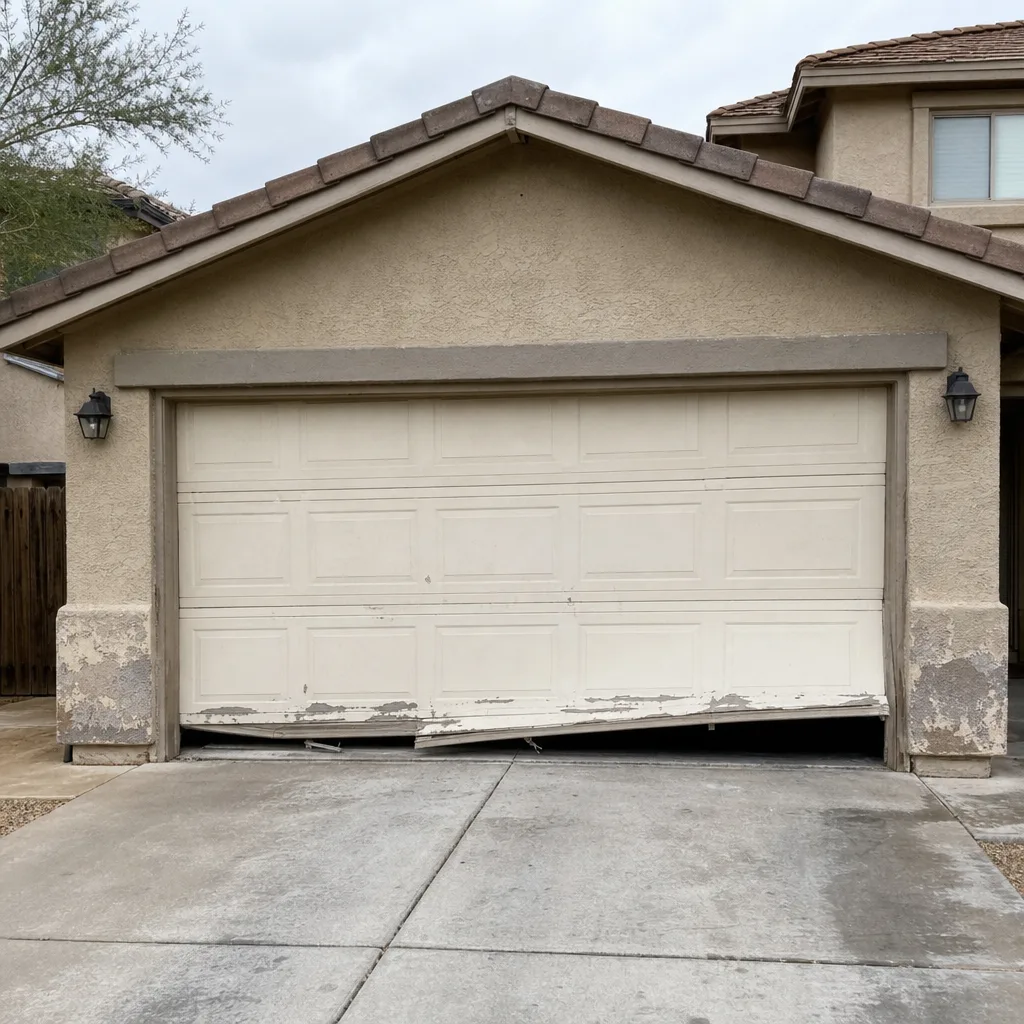 Before
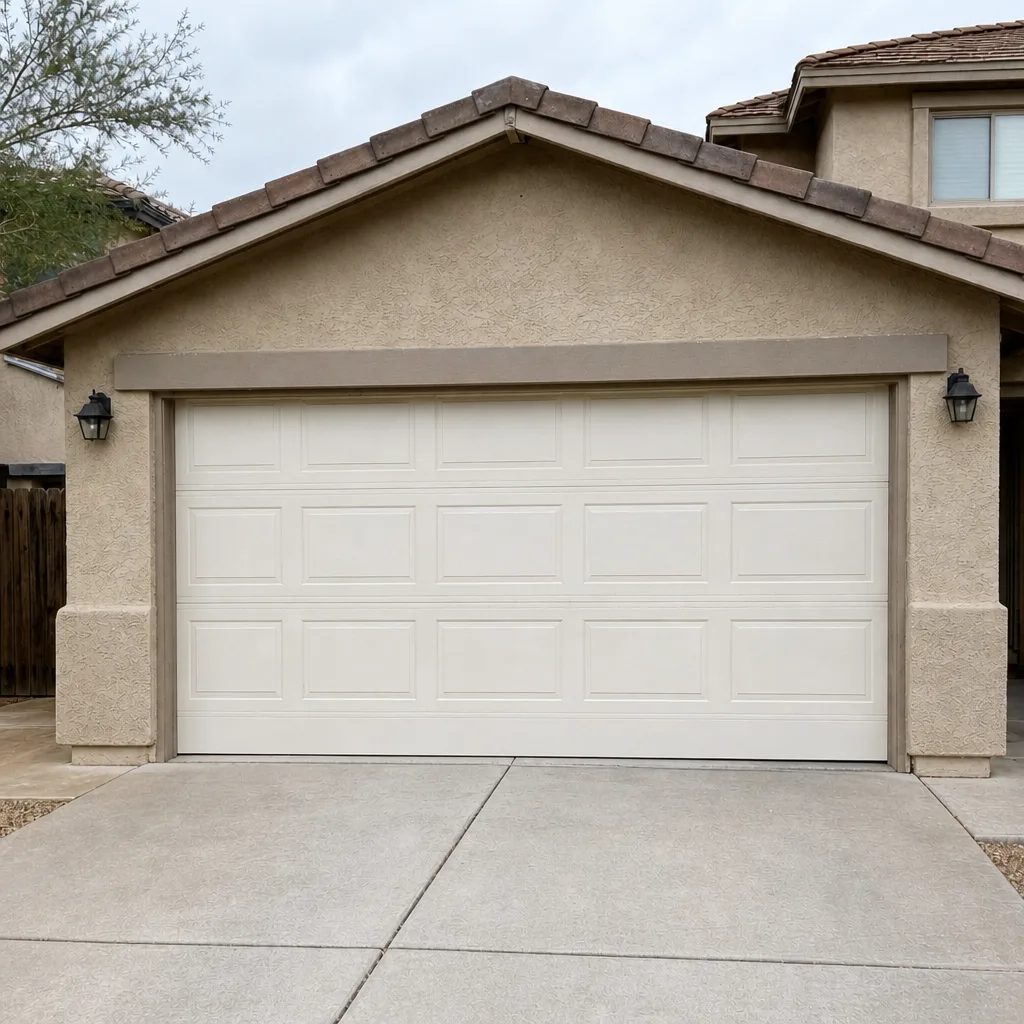 After
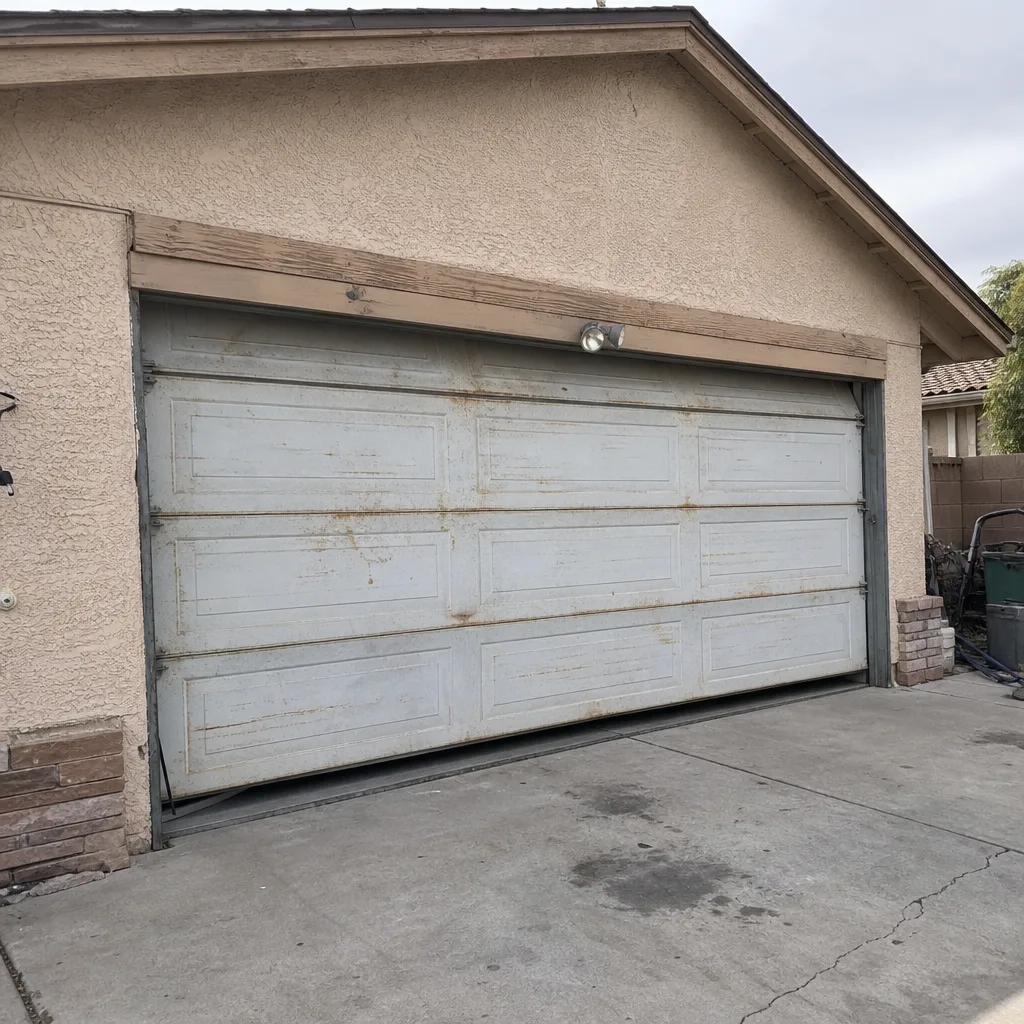 Before
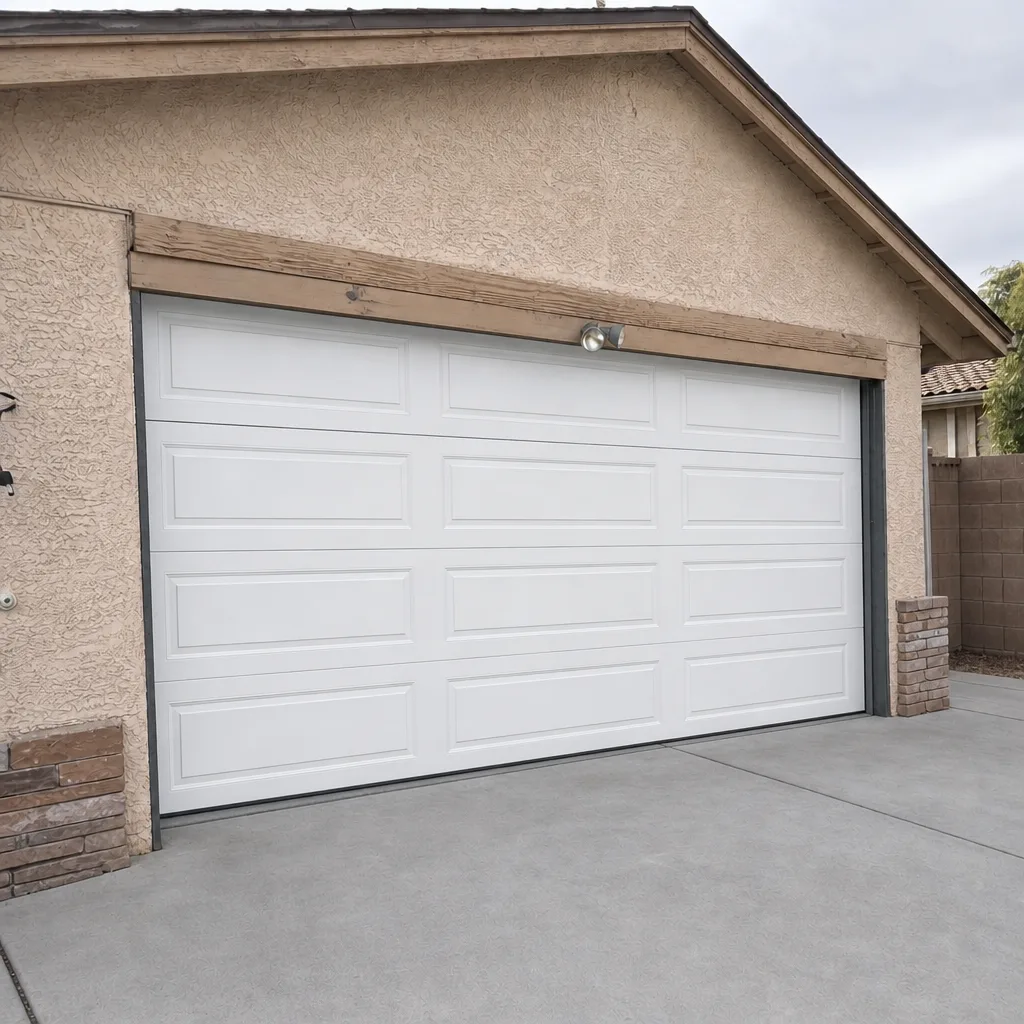 After
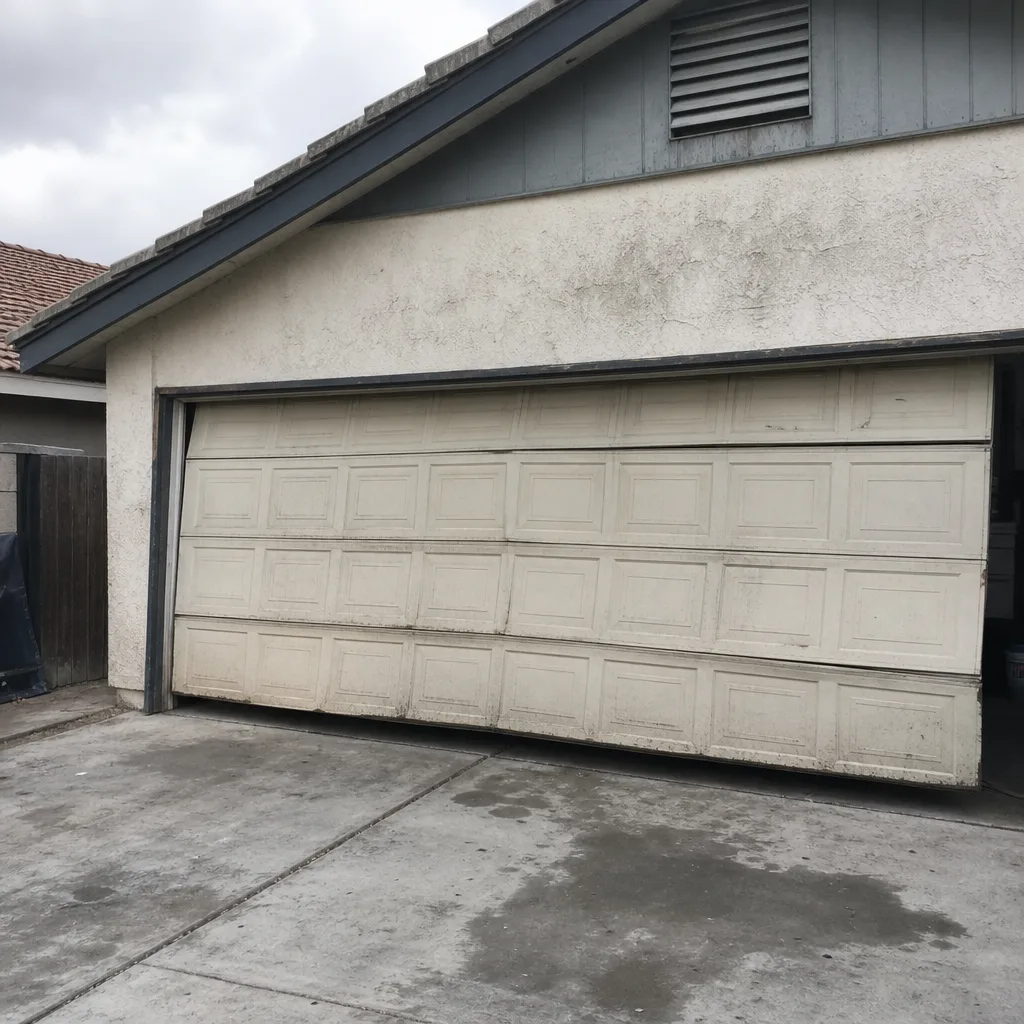 Before
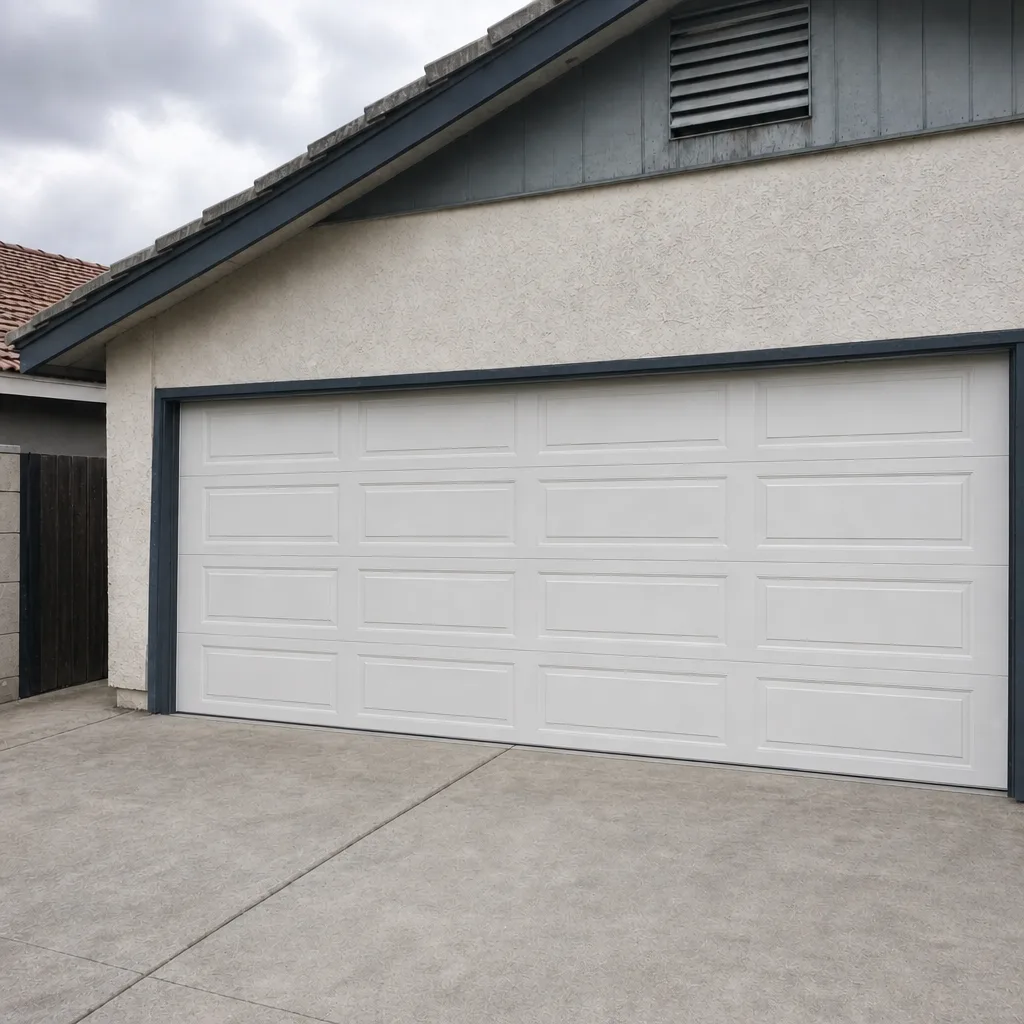 After
When to Call a Professional
Call for help when the door won’t lift by hand with the opener disengaged, when a spring has visibly snapped, when a cable is hanging or off its drum, or when the door has come off its track. Call when the door has flexed under wind load and won’t operate smoothly. Call when the opener runs but the door stays put and you’ve already re-engaged the trolley. And call when a smart opener is refusing to reconnect after a firmware update and you’ve already cycled power once.
Every one of those situations carries a risk of injury if you try to solve it alone, and none of them are safe to diagnose with a wrench without proper training. The fast, clean fix is to describe what happened and let a technician choose the right repair. Hawk Garage Door Repair offers free estimates in Avondale with a written price before any work starts. If a spring snapped, a haboob bent a track, or an opener is dead, we’ll tell you what’s wrong before we tell you the price. Call (877) 824-4815. We answer 24/7. Fast dispatch from 7am to 7pm, Sunday through Friday.
Frequently Asked Questions
A single torsion spring replacement in Avondale typically runs $180 to $340 for standard residential springs. A matched pair is usually replaced together because one new spring next to a worn one creates uneven load, so plan for roughly twice a single-spring price when both need replacing. The written estimate we provide sets the final price, and the price is quoted and agreed before any work starts. Call (877) 824-4815 for an exact quote – estimates are free.
In most cases, yes. Same-day service is typical for door and opener repairs when you call early. We answer 24/7, and fast dispatch from 7am to 7pm, Sunday through Friday. If a call comes in outside dispatch hours, we book it into the next opening, Sunday through Friday, 7am to 7pm. Call (877) 824-4815 and describe the failure so we can send the right parts on the first visit.
Pull the red manual release cord hanging from the opener’s trolley, then lift the door by hand using both sides. But the safety matters more than the technique: check first that your springs are intact. If a spring is visibly broken or a cable is hanging, do not pull the release; the door can come down hard on anyone underneath. If you’re not sure, wait and call. A technician can talk you through what’s safe to try from a distance. Call (877) 824-4815 if you’re unsure whether it’s safe to open.
No. The estimate we write is the price, and it’s confirmed before any work begins. If a technician discovers additional damage during the repair (a cable that was fine on the initial inspection but fails when the spring is replaced, for instance), the additional work is quoted and agreed with you before it’s done. No invoice surprises. Call (877) 824-4815 for an exact quote – estimates are free.
Yes. Our technicians are experienced, up to 15 years in the trade, and they’re insured and licensed as required for garage door work in Avondale. They diagnose the brand, model, and failure before quoting, so the recommendation follows what the door actually needs. Call (877) 824-4815 to schedule a free estimate.
We service eight major garage door and opener brands: LiftMaster, Chamberlain, Genie, Clopay, Amarr, Wayne Dalton, Craftsman, and Raynor. That means we come in knowing how your door is built and how your opener thinks. Brand-agnostic diagnosis means the recommendation follows the door’s needs rather than a single manufacturer’s upsell. Call (877) 824-4815 when you need a repair that fits your brand.
The Bottom Line
Garage door emergencies in Avondale follow a short list of predictable patterns: haboob wind damage, summer power failures, and springs that give way when a vehicle is trapped inside. Each of those has a known response plan, and the plan is worth learning before it’s needed. Practice the manual release once on a calm day. Check the springs, tracks, and cables after every wind event before pressing the opener button. Keep the door brand, opener model, and age on a note inside the door jamb for the day you need to call. Call (877) 824-4815 for a free estimate, and let a technician take it from there. Small preparation today turns a potential emergency into a routine repair.
Written by the team at Hawk Garage Door Repair.